
How Sounds Delicious cut music search time by 55%
How we redesigned the Sounds Delicious library platform to improve discovery speed, increase licensing inquiries, and automate catalog operations.
| Company | Sounds Delicious |
| Industry | Music Licensing |
| Size | 5 employees |
| Location | Los Angeles, CA |
| Challenge | Outdated library with poor navigation and missing core features driving clients away |
| Result | 55% faster search times, 6x more licensing inquiries, and a modernized library platform |
Situation
Sounds Delicious is a boutique music licensing library based in Los Angeles, serving music supervisors, video producers, and advertising agencies. With a curated catalog and a five-person team, the company had built a reputation for quality music, but their digital library experience was no longer competitive.
In an industry projected to reach $9.7 billion by 2030, smaller libraries compete directly with large-scale platforms that host massive catalogs. The difference comes down to curation, discovery experience, and speed. The existing Sounds Delicious platform was underperforming on all three.
Challenge
The previous platform was difficult to navigate and lacked essential workflows. Users could not combine filters effectively, preview content with confidence, or move quickly from discovery to usage. For clients already under production deadlines, that friction translated into lost momentum and fewer conversions.
Core functionality was also missing on the operations side. There was no efficient process for bulk uploads, no intelligent metadata assistance, and no streamlined client access request flow. The team had to spend valuable time on repetitive tasks instead of curation and client relationships.
"Our music was great, but the experience of finding it wasn't. Clients would call us instead of using the site, and that told us everything we needed to know."
— Jordan Ellis, Founder, Sounds Delicious
Action
We rebuilt the library as a modern platform designed for fast discovery, creative workflows, and operational efficiency.
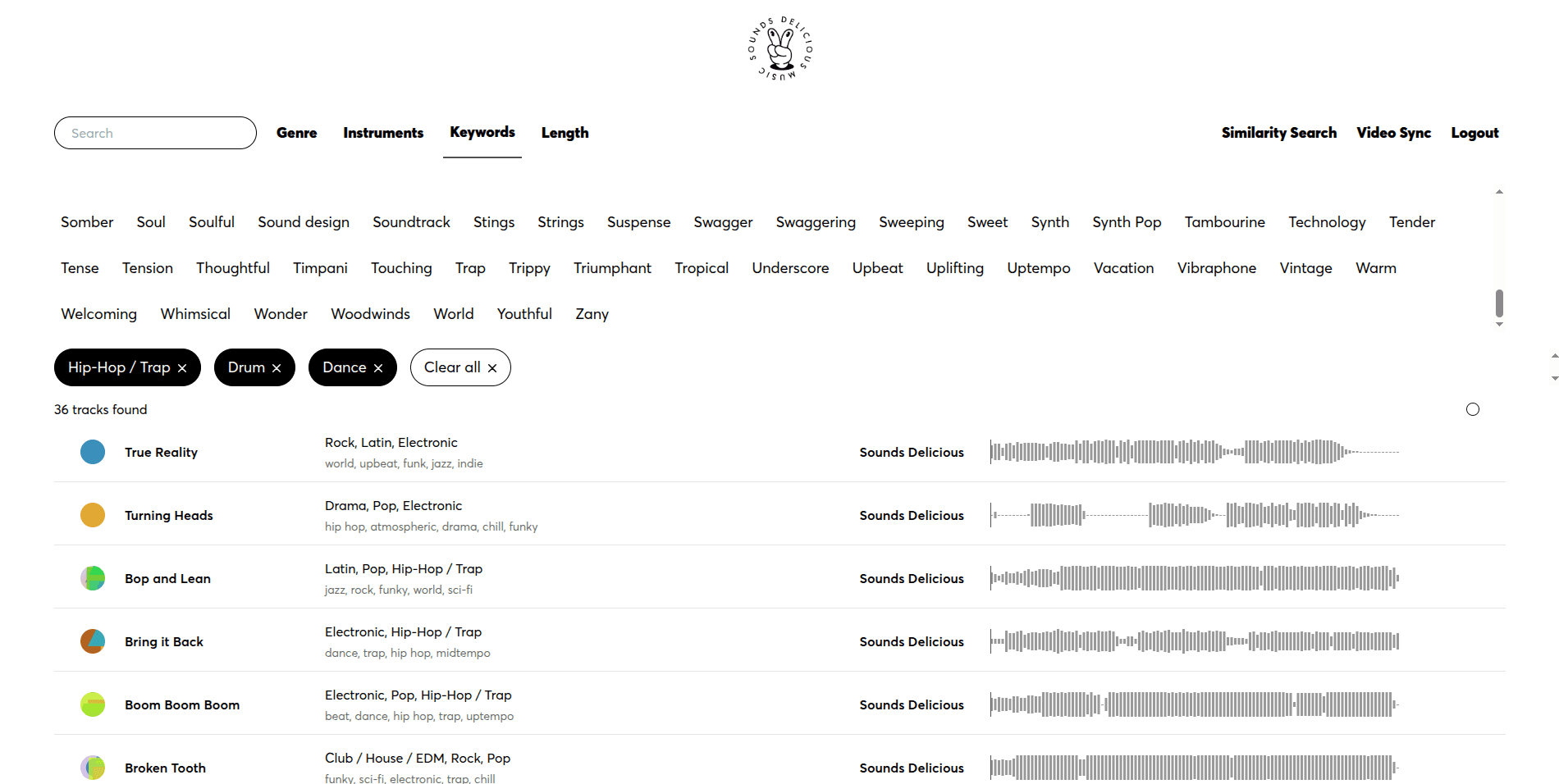
Intelligent discovery. The new experience includes multi-dimensional filtering across genre, instruments, keywords, and track length. A persistent real-time search bar indexes track names, artists, and metadata so users can find relevant options quickly.
AI similarity search. Users can paste a YouTube URL or upload an audio file. The system analyzes the reference and returns the most similar catalog tracks, ranked by weighted similarity. Users can tune emphasis across genre, instrument, and keyword relevance.
Video sync and export. Music supervisors can upload video, audition tracks against picture in-browser, adjust audio levels, and export preview MP4 files without leaving the platform.
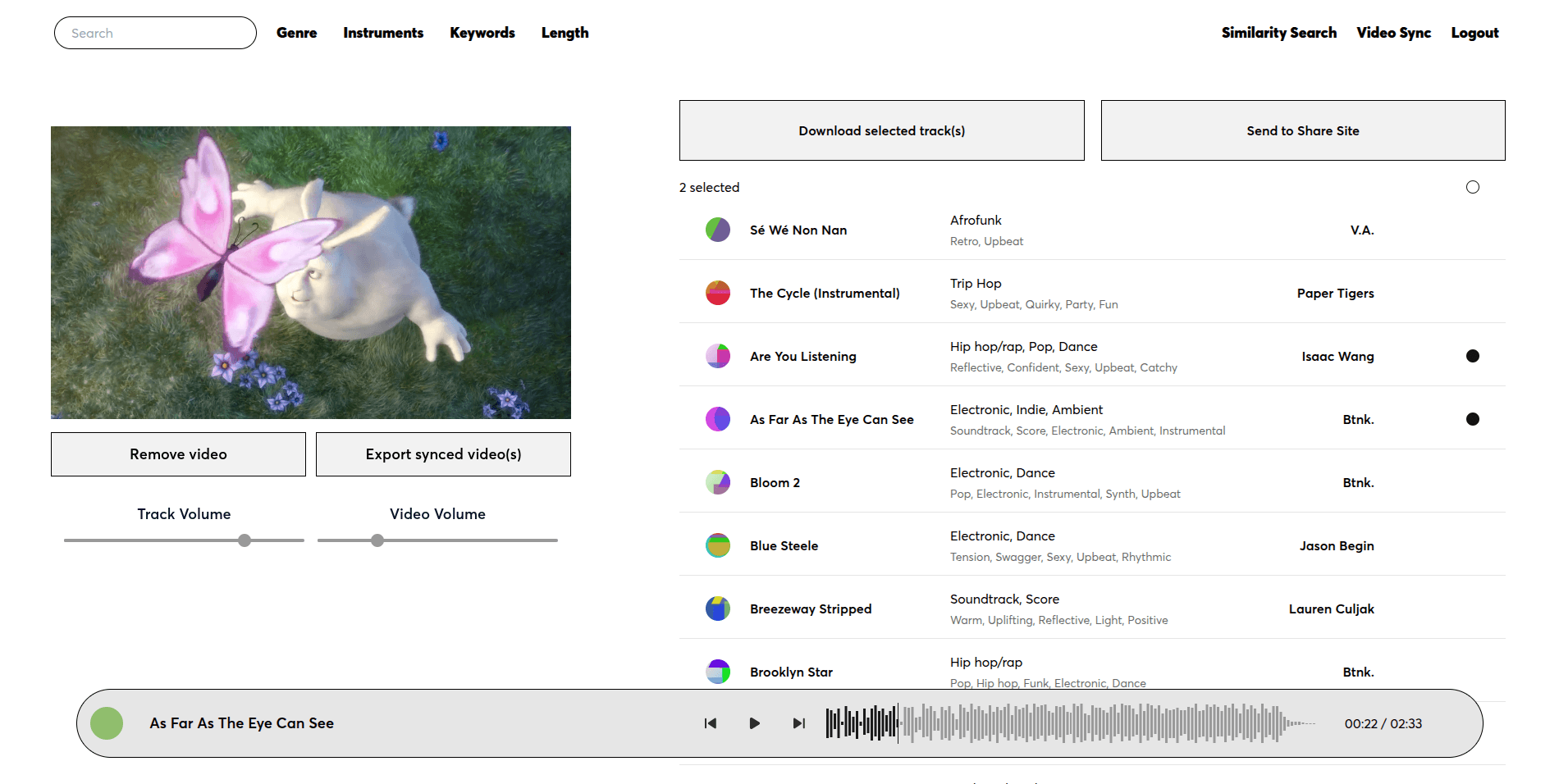
Professional playback UX. Each track includes waveform visualization, interactive scrubbing, color-coded duration context, and a persistent floating player that remains available while browsing.
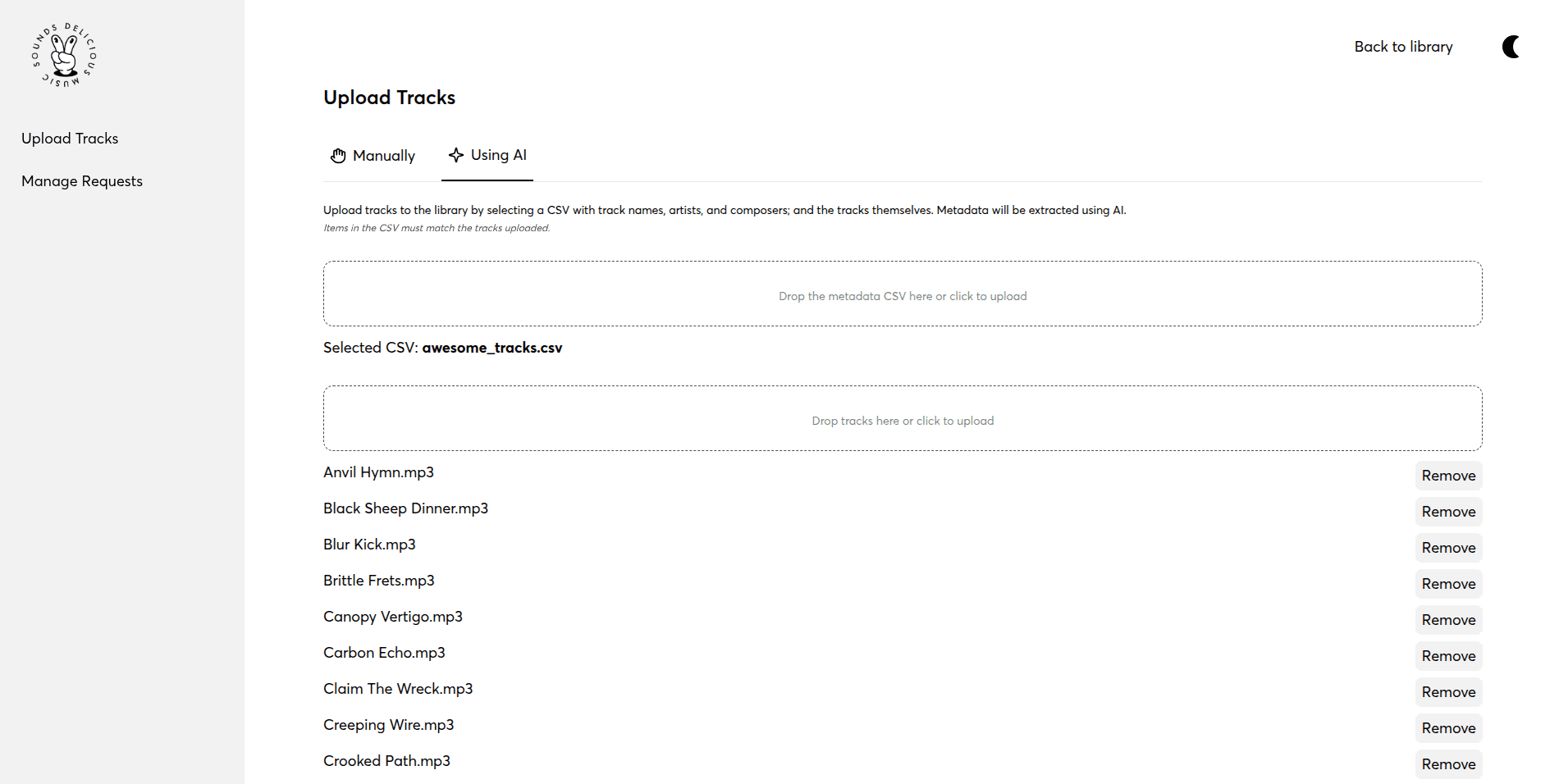
Admin automation. The backend supports AI-assisted bulk uploads. Teams can ingest multiple files and metadata in one flow while auto-generating tags to reduce manual entry. Access requests were also streamlined into a one-click approval process with automated credential delivery.
Playlist sharing. The team can create curated playlists with custom artwork and publish shareable collections for client-specific music directions.
Results
Within the first quarter after launch, Sounds Delicious recorded measurable gains across discovery, conversion, and operations:
| Metric | Impact |
|---|---|
| Music search time | Reduced by ~55% |
| Licensing inquiries | Increased by 6x |
| Admin tagging effort | Reduced by ~98% |
| Video audition workflow | Moved in-browser, reducing turnaround from days to minutes |
| Access approvals | Reduced to one-click workflow |
For a five-person team in a highly competitive market, the new platform transformed the catalog from a static archive into an intelligent discovery product aligned with how professionals actually work.